What is cherry eye?

Cherry eye is the name commonly given to the prolapse of the third eyelid gland.
2025. March 11.
What is cherry eye?

What is the gland of the third eyelid?

The gland of the third eyelid (nictitans gland) is located on the inner surface of the third eyelid (nictitating membrane) and produces roughly 25% of the tear film.

When does it prolapse?

Prolapse of this gland occurs primarily in young dogs and is caused by laxity of the connective tissue. A reddish swelling appears in the medial canthus (inner corner of the eye). The condition is also commonly known as "cherry eye."

Why does it not resolve on its own?

Once the gland prolapses, it becomes edematous, so it often can no longer return to its original position.

What problems does cherry eye cause?

The prolapse impairs the blood supply of the gland, and over time the glandular tissue itself is damaged. In the long term, this can lead to necrosis of the glandular tissue and consequent keratoconjunctivitis sicca (dry eye disease). In certain breeds, e.g. the English bulldog, prolapse of the gland is more common because of their lax connective tissue.

What can be done?

The gland must always be repositioned to its original location. Removing it is a professional error and leads to keratoconjunctivitis sicca (dry eye disease).

What is lens luxation?
2025. Mar 11

What is lens luxation?

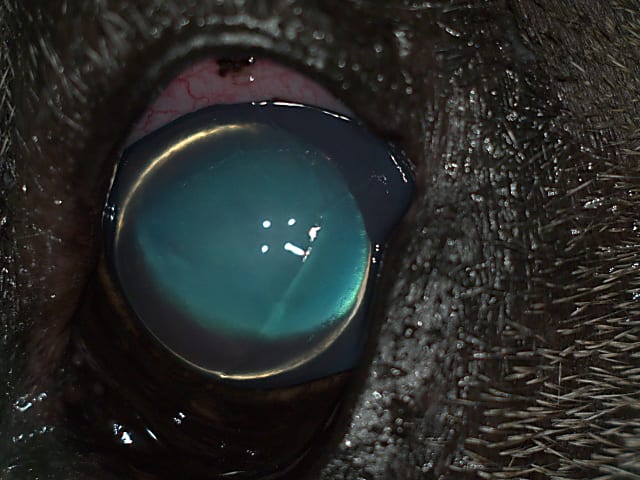
Lens luxation is the abnormal displacement of the lens in a dog's eye. It is most often genetic in origin and occurs mainly in terrier breeds. The condition can involve sudden pain, tearing and vision loss. Treatment is urgent and often requires surgery. With a timely diagnosis, vision can be partially or fully saved.
How does an eye examination work for animals?
2025. Mar 11

How does an eye examination work for animals?

An eye examination is generally a painless, thorough procedure in which the vet examines your pet's eyes inside and out. We use special tests (e.g. tear production, eye pressure measurement) for an accurate diagnosis. The most common eye problems are discharge, squinting, red eyes or vision loss. Dogs, cats and other small animals can all be examined. If you notice anything unusual, please don't hesitate to contact us!